AI Is Reshaping Work Itself, And History Proves It Has Done This Before
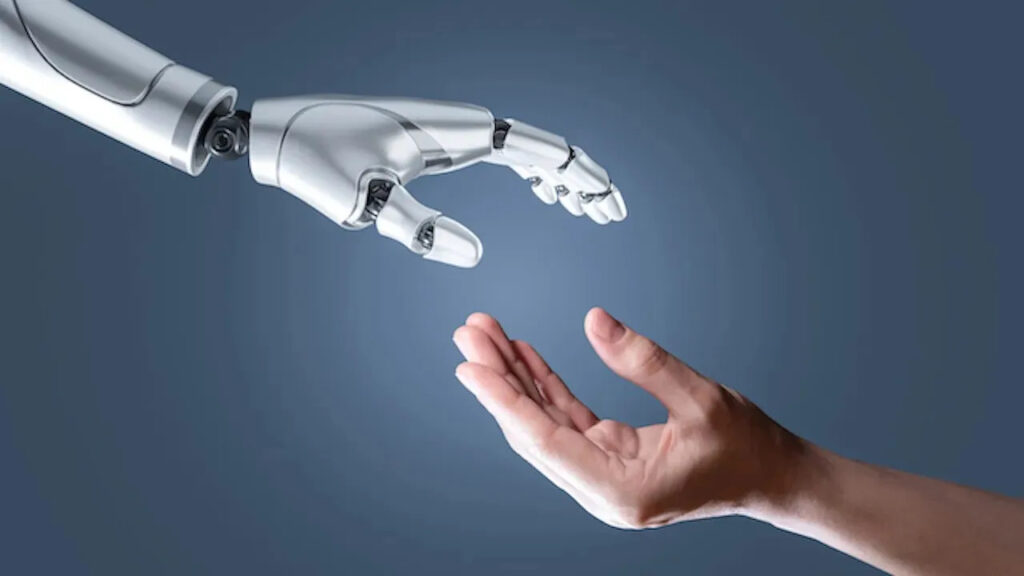
The alarm around artificial intelligence and jobs is everywhere. Careers will collapse. Workers will become obsolete. The future of employment looks bleak. However, that framing misses something important, and history makes it clear why.
The fear of technology ending work is not new. It is a pattern that has played out before, and each time, the outcome has been more complex than simple disappearance.
When computers flooded offices in the late 1980s and early 1990s, clerical roles shrank, and manual record-keeping faded. From the outside, it looked like mass removal. But at the same time, software development boomed. IT services expanded. Entire industries formed around the very machines that were supposed to eliminate human labour. The internet brought another wave in the early 2000s. Location lost its grip on work. Laptops and connections became enough for income. Roles changed shape, some vanished, but others appeared that had not existed a decade earlier.
The mistake, in both moments, was treating visible loss as the whole story.
That same mistake is happening now with AI reshaping work across industries.
What AI is doing, most visibly, is compressing repetitive work, tasks with clear steps, fixed inputs, and predictable outputs. Compression, though, is not the same as disappearance. When a task is compressed, it takes less human time. The work is absorbed into tools. And that absorption, according to analyst Mr Chandravanshi writing on DEV Community, creates space, not immediately labelled, not cleanly packaged, but real capacity that did not exist before.
New work, as history shows, does not arrive with a name tag. It forms around what the technology makes easier. After computers, it formed around building and managing software. After the internet, it formed around digital services and communication. With AI reshaping work today, it is forming around judgment, coordination, and the ability to direct systems that no longer need step-by-step instruction.
The shift is also harder to detect because it does not erase job titles overnight. Instead, it changes the weight of the work inside them. A task disappears here. A responsibility shifts from execution to oversight there. The role still exists, but it does not feel the same. The change happens at the level of tasks, and tasks move faster than titles.
There is also an economic constraint that rarely enters the conversation. If incomes disappear at scale, demand disappears with them. No demand means no functioning market. That reality does not prevent disruption, but it limits total collapse. The system requires participation to sustain itself, and so it adjusts, not by design, but by pressure. Roles shrink in one place. They expand elsewhere. New forms of work appear around what becomes possible, not around what was lost.
This process is uneven. Some workers move early, often by accident. Others remain tied to roles that are quietly losing relevance, and the gap does not show immediately. It shows over time.
Chandravanshi’s analysis, referenced from DEV Community, argues that AI is not introducing something unprecedented. It is accelerating something familiar. Work is moving away from what can be reduced to steps and toward what cannot. The moment that feels sudden to most people is usually the moment they notice, not the moment the change began.
AI reshaping work is not the end of employment. It is a redefinition of what work means. That distinction matters enormously for how workers, employers, and policymakers respond to what is coming.