
U.S. Senate Banking Committee Unveils CLARITY Act Ahead of Key Hearing
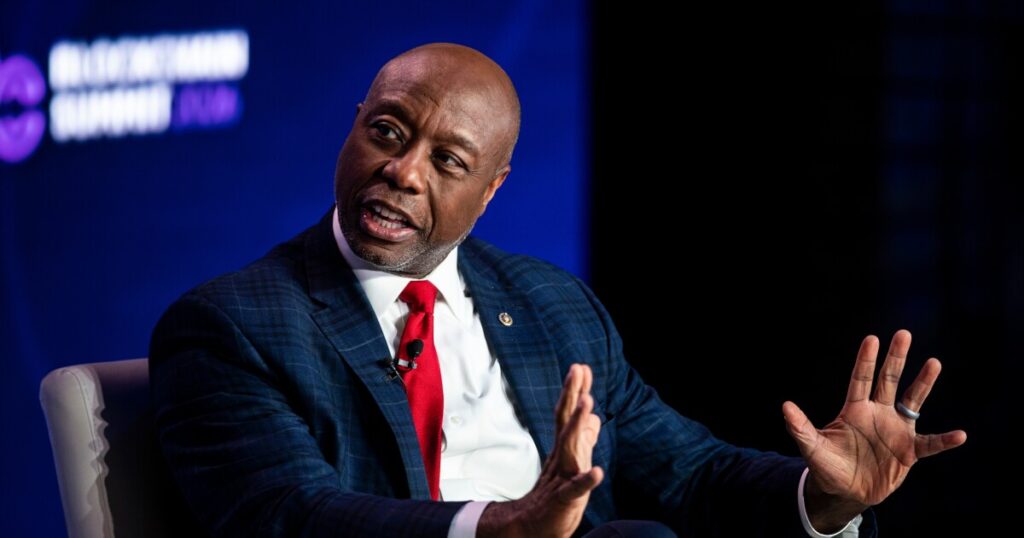
The U.S. Senate Banking Committee dropped the full text of the long-awaited CLARITY Act just after midnight on Tuesday, setting the stage for what could be a defining moment in American crypto regulation. The legislation that could fully insert the U.S. crypto industry into the regulated financial system has emerged in its latest form, with the Senate Banking Committee unveiling the market structure bill’s text in advance of this week’s hearing set to push the effort forward.
The Senate Banking Committee has scheduled a markup vote on the Digital Asset Market Clarity Act for Thursday, May 14, at 10:30 AM ET, bringing the United States one step closer to its first comprehensive crypto market-structure law. The CLARITY Act crypto market structure bill runs 309 pages and has been in the making for months, shaped by fierce negotiations between crypto firms, traditional banks, and lawmakers on both sides of the aisle.
Committee Chairman Tim Scott described the legislation as reflecting “serious, good-faith work across the committee,” saying it “delivers the certainty, safeguards, and accountability Americans deserve” and “puts consumers first, combats illicit finance, cracks down on criminals and foreign adversaries, and keeps the future of finance here in the United States.”
At its heart, the CLARITY Act crypto market structure bill tackles one of the crypto industry’s oldest headaches, how digital tokens are classified. If signed into law, the bill would clarify financial regulators’ jurisdiction over the burgeoning sector and define whether specific tokens are categorized as securities or commodities, providing the legal certainty the industry claims is “existential” to its future in the United States. The SEC and CFTC would each receive defined lanes, ending years of regulatory ambiguity that has haunted industry players.
One of the bill’s thorniest battles has been over stablecoin rewards. A deal crafted by Senators Thom Tillis and Angela Alsobrooks draws a line between two types of stablecoin rewards: those paid simply for holding a stablecoin would be banned due to their resemblance to bank deposit interest, but rewards earned through actions like making a payment would remain allowed. That compromise, though still contested, was enough to unlock the path to this week’s markup after a January session was abruptly cancelled when Coinbase withdrew its support.
The DeFi community, watching closely, got some encouraging signals. The legislation still includes a section to match DeFi’s Blockchain Regulatory Certainty Act, which protects software developers that don’t control people’s money from being treated as money transmitters. The DeFi Education Fund said it was “encouraged by the direction of recent negotiations,” though it noted it would continue to track the fine print.
Not everyone is satisfied. The banking lobby has escalated its pressure campaign at the eleventh hour. On May 9, the American Bankers Association, Bank Policy Institute, and Independent Community Bankers of America sent a joint letter to Chairman Tim Scott and Ranking Member Elizabeth Warren formally rejecting the compromise that Senators Tillis and Alsobrooks negotiated to break the stablecoin-yield impasse.
Democrats, meanwhile, are drawing a hard line on a separate issue, ethics. Senator Elizabeth Warren criticized the proposal, warning that the bill could “turbocharge Donald Trump’s crypto corruption.” She noted that the president and his family have reportedly raked in at least $1.4 billion in gains from crypto deals alone. The conflict-of-interest section that would theoretically limit government officials from profiting from the crypto industry is not under the jurisdiction of the banking panel, meaning the topic has to get into the legislation later. Senator Kirsten Gillibrand has been equally firm, no ethics provision, no Democratic support.
The White House is targeting a July 4 signing, with the mechanics being: Senate Banking Committee markup this month, four working Senate weeks in June for floor passage, and enough runway for a House vote before the Independence Day deadline. Clearing the full Senate would require the bill to win over a minimum of seven Democrats. Prediction markets currently put the odds of the CLARITY Act becoming law in 2026 at roughly 67–75%.
The stakes are high on all sides. Crypto advocates are eager for passage ahead of the November midterm elections, where a Democratic takeover of the House could put the legislation’s future in jeopardy. For now, Thursday’s committee session is the first gate, and Washington is watching every move.