SoftBank AI Data Centre Battery Factory turns LCD plant into megabet
Quick Reads
- What is SoftBank converting? A former Sharp LCD factory in Sakai, Osaka, into one of Japan’s largest battery production lines for AI data centres.
- When will the batteries be ready? They will reach that point within five years, around 2031, but companies are building the data centres they will power right now.
- Why is SoftBank making its own batteries? To avoid competing with cloud giants for limited supply from manufacturers like CATL, BYD, and Tesla.
- How does this connect to Stargate? The Stargate $500 billion AI joint venture demands massive energy storage, and SoftBank wants full control of that supply chain.
- What is SoftBank’s financial risk here? The company carries roughly $135 billion in debt and has an S&P negative credit outlook, yet continues to invest aggressively in AI infrastructure.
SoftBank is making a major move in AI infrastructure. The Japanese tech giant plans to convert part of a former Sharp LCD factory in Sakai, Osaka, into a battery production facility. The company bought the 440,000-square-metre site last year for roughly $676 million. Initially, SoftBank announced it would become an AI data centre. Now, it will also manufacture batteries at scale.
The SoftBank AI data centre battery factory plan came after executives considered using the space for robotics production. They eventually settled on energy storage. Bloomberg first reported the development on Wednesday. Developers expect the batteries to come online within five years, around 2031. However, the data centres they will power are already under construction today.
This decision adds a critical final piece to SoftBank’s vertical integration strategy. The company already owns Arm, the chip architecture powering smartphones and data centres globally. It also controls Graphcore and Ampere Computing, two major AI chip designers. Furthermore, SoftBank is building modular data centre units at a former electric vehicle plant in Lordstown, Ohio. Its energy arm, SB Energy, operates over three gigawatts of solar capacity in the United States. With the Sakai battery line, SoftBank now aims to manufacture its own energy storage hardware. Consequently, it would no longer depend on suppliers like CATL, BYD, or Tesla.
The urgency behind the SoftBank AI data centre battery factory plan is clear. AI data centres create wildly unpredictable power demands, swinging from 30% to 100% capacity within seconds. Batteries act as a critical buffer between these facilities and the power grid. Additionally, grid interconnection queues in the US are severely congested. Therefore, batteries allow data centres to go live before permanent grid connections are available. The North American market for AI data centre energy storage is currently worth $898 million. Analysts project it will reach $32.4 billion by 2034.
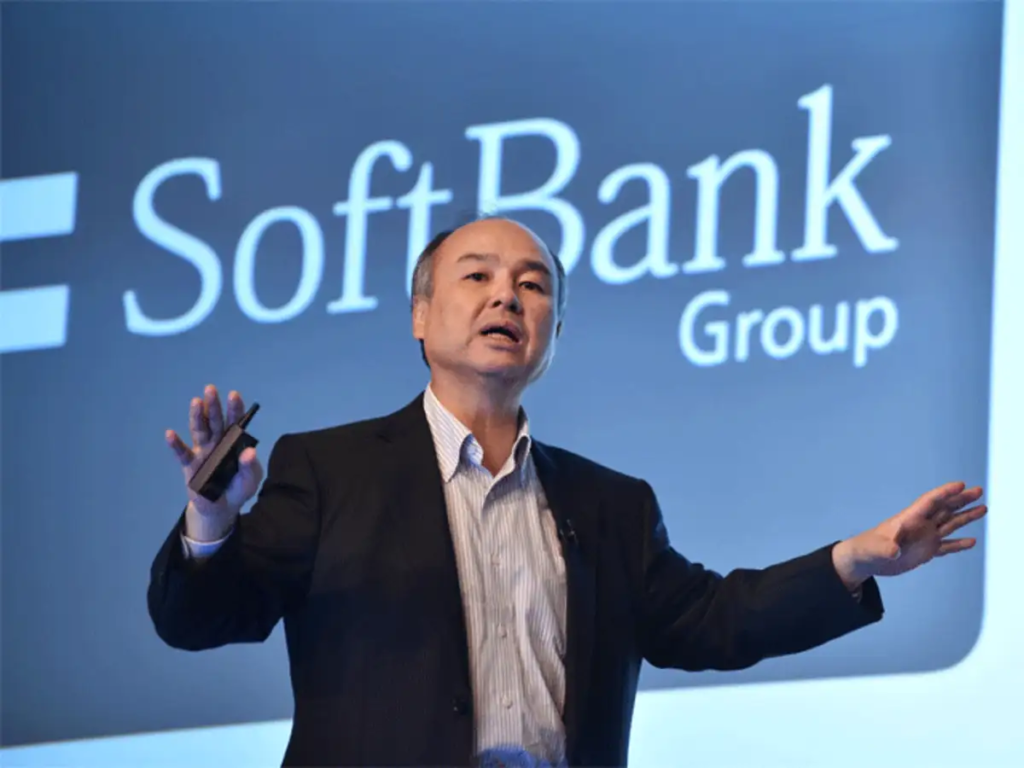
The stakes grow even higher when you consider SoftBank’s Stargate commitments. Masayoshi Son chairs Stargate, a $500 billion AI infrastructure joint venture with OpenAI, Oracle, and MGX of Abu Dhabi. SoftBank’s planned campus at a former nuclear site in Portsmouth, Ohio, alone targets 10 gigawatts of capacity. Meanwhile, a Texas site in Milam County is already under construction. In January, OpenAI and SoftBank jointly invested $1 billion into SB Energy to expand power infrastructure for Stargate sites. Buying batteries from third parties means competing with every major cloud operator for limited supply. Making them in-house means controlling the timeline entirely.
Still, the financial pressure on SoftBank is real and growing. The company carries approximately $135 billion in total debt. S&P recently downgraded its credit outlook to negative while affirming its BB+ rating. SoftBank’s deepening financial commitment to OpenAI now totals roughly $64.6 billion for a 13% stake. In April alone, the company launched a $3.56 billion foreign currency bond offering. The Sakai site acquisition cost $676 million before any battery line conversion begins. The company has not yet disclosed the full cost of large-scale battery manufacturing, which typically runs into the billions.
There is also a significant geopolitical dimension to this plan. CATL and BYD, the world’s leading battery manufacturers, are both Chinese companies. For a firm whose chairman operates at the heart of US-Japan AI policy, supply chain independence matters deeply. Oracle’s $50 billion AI data centre capital expenditure underlines just how fierce the infrastructure race has become. SoftBank wants to be ahead of that curve, not caught waiting on foreign suppliers.
Notably, SoftBank has not disclosed the battery chemistry it will use at the Sakai facility. The company has explored solid-state battery research through a partnership with Enpower Japan, achieving energy densities of 350 watt-hours per kilogram. Whether the factory will produce lithium-ion, solid-state, or another type of battery entirely remains unknown.
The Sharp LCD factory in Sakai once symbolised Japan’s peak in consumer electronics. Today, SoftBank is repurposing it as the foundation for the AI-powered future it is betting everything on. The SoftBank AI data centre battery factory represents either the most integrated AI infrastructure play ever attempted, or a conglomerate expanding faster than it can finance. The answer may not come until the first battery rolls off the line.