AI-Native Frameworks Are Changing How Software Gets Built, and Nigerian Developers Are Joining In

Not long ago, developers wrote thousands of lines of code to build a single feature. Today, some ship entire products in days, because they build with AI at the foundation, not the finish line.
This is the core idea behind AI-native frameworks. Unlike traditional software where developers layer AI on top of existing logic, AI-native products treat models, data pipelines, and learning systems as fundamental components. It is a completely different way of thinking about software. Moreover, it is spreading fast.
In 2025, experts described AI-native architecture as an emerging layer. By 2026, it has become the baseline expectation for new applications.
The Frameworks Driving the Shift
The tools making this possible have matured quickly. LangChain is now the most widely adopted open-source framework for building AI agents and LLM applications, with roughly 134,000 GitHub stars and more than 1,000 pre-built integrations connecting models to data systems, vector databases, and external APIs.
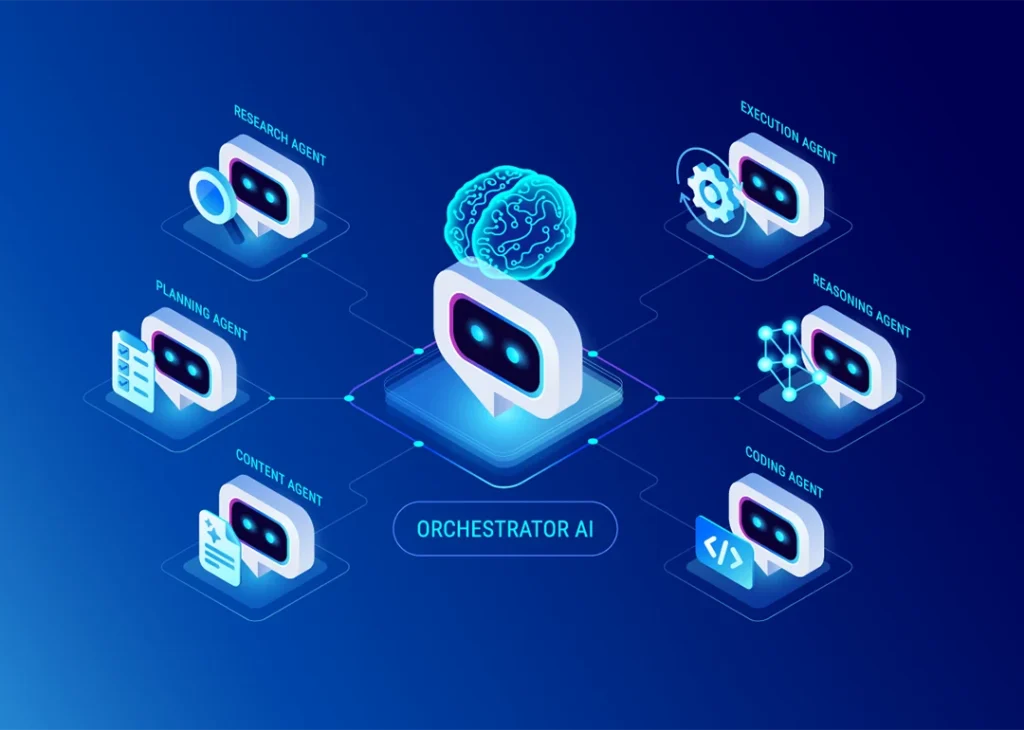
Alongside it, frameworks like LlamaIndex and LangGraph are reshaping how developers structure their apps. LangGraph introduced graph-based orchestration for deterministic multi-agent workflows, a shift from single API calls to full workflow engines that manage context, tool calling, and response validation.
For enterprise teams already on Microsoft infrastructure, Semantic Kernel offers a compelling option. Its plugin system lets developers define discrete AI capabilities and connect them directly to enterprise service APIs, without building custom adapter layers. Choosing the wrong framework, however, carries a real cost. Abstraction that obscures failure modes costs more in debugging time than it saves in setup time.
What It Looks Like in Practice
The shift is not theoretical. It is showing up in products real people use every day.
A former Flutterwave developer built Decide, an AI agent that reads a spreadsheet’s structure, executes changes directly, and explains what it did in plain language. It gained 1,000 users in its first 24 days with no marketing spend, reached 3,000 users within weeks, and by February 2026 had climbed to fourth place worldwide on SpreadsheetBench.
That is not a Silicon Valley story. That is Lagos.
Across Nigeria’s tech ecosystem, developers are adopting these tools at scale. Nigerian developers at Lagos fintechs and startups are using GitHub Copilot to cut coding time by 30 to 50 percent. Many Nigerian founders are also building AI capabilities tuned specifically to local languages, financial behaviors, and market conditions, an approach that could position them more competitively within the broader African tech ecosystem.
Why This Matters Beyond the Code
This is not just a developer story. It is an economic one.
Nigeria’s federal government has continued pushing its National AI Strategy, with partnerships between government agencies and private technology firms aimed at building local AI capacity, talent pipelines, and startup support structures. The window to enter this space early is still open.
AI frameworks are valuable tools for solving complex problems, and the AI market is expected to reach $407 billion by 2027. Developers who understand AI-native architecture are not just writing better code. They are building products with a longer competitive shelf life.
The question is no longer whether AI belongs in software development. It already does. The question now is whether Nigerian developers will build with it, or simply use what others have built.
Want to future-proof your skills? Explore frameworks like LangChain, LangGraph, and LlamaIndex. The documentation is free. The opportunity is not guaranteed to wait.
Writer: Princely Oriomojor