
He Learned Design on His Phone. Today His Product Has 150,000 Users
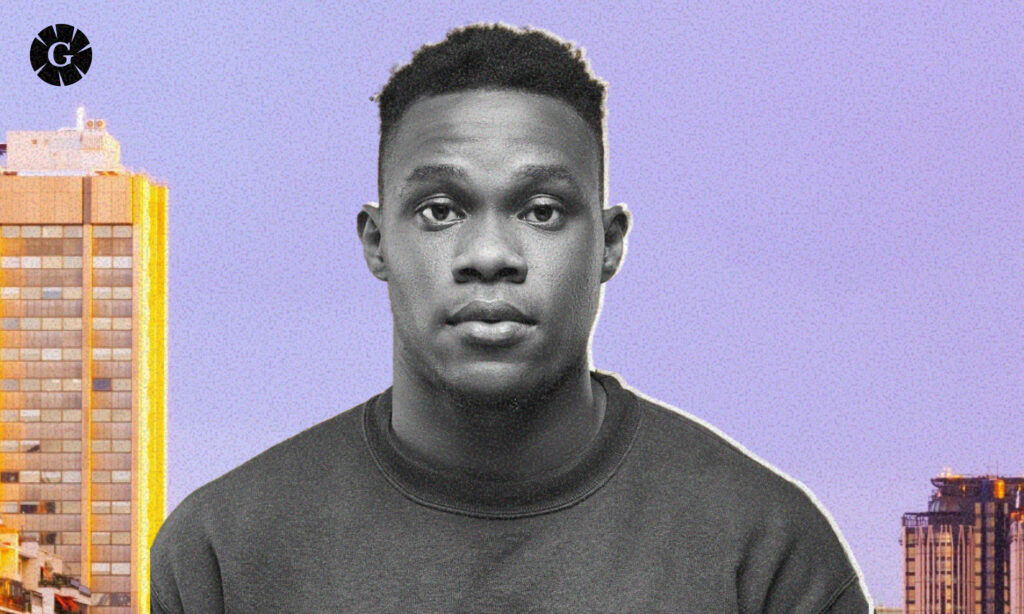
There are founders who wait for the right conditions before they start building. Michael Oyewusi was not one of them.
When Glostarep sat down with the Lagos-based product designer, builder, and educator, what emerged was not just a career story, it was a masterclass in what happens when obsession meets discipline in one of the world’s most constrained but quietly explosive tech environments.
Oyewusi did not begin with a MacBook, a design internship, or a Silicon Valley playbook. He started on his phone, teaching himself design with Canva, frustrated by interfaces he could critique but not yet build. That frustration, it turns out, was the beginning of everything.
Today he is the Founding Designer at Awadoc, an AI-powered health platform already live in 30+ countries, with over 150,000 users reached in under a year. He has also shaped more than 30 products across 10 industries, built one of Nigeria’s most engaged design communities on LinkedIn, and become a recognisable voice on African tech’s biggest stages.
But what struck us most in this conversation was not the numbers. It was what he believes is being missed, about African builders, about AI, and about who gets to own the narrative of what is being built on this continent right now.
This is his story, in his own words.
Tell us about yourself
I am a senior product designer and builder based in Lagos, Nigeria, with 30+ products designed across 10+ industries, creating digital experiences that have reached thousands of users and unlocked multi-million dollar growth. I am the founding designer at Awadoc, a product-led health platform where we are building AI-powered tools to transform how care is accessed and delivered across Africa.
When I am not shipping products, I show up as a mentor, design educator, and public speaker, sharing what I have learned about designing in the real world across stages, communities, and online. I have built one of the most engaged design communities on LinkedIn in Nigeria. And when I have fully switched off, you will find me deep in a video game or watching football.
What problem are you solving with your work, and why does it matter?
Nigeria alone has a doctor-to-patient ratio of 1 to anywhere between 3,000 and 9,000 people according to the WHO. That gap is not a statistic, it is a daily reality for millions of people trying to access care. At Awadoc, we are solving the friction between healthcare providers and the people they serve, making it easier to access care, manage knowledge, and get support through AI. In less than a year we have reached over 150,000 users, which tells us the problem is real and the demand is urgent.
But beyond the product itself, what I care most about is closing the gap between ambition and execution for African builders. A lot of the tools, frameworks, and infrastructure that could help people build world-class products exist, but access to the thinking behind them does not. That is the gap I try to fill, whether through the products I build or the conversations I start publicly.
How did you get into this space, and what has your journey been like so far?
I was the best artist in my secondary school, but my father had other plans. He wanted something more traditional, so I ended up studying Electrical Electronics Engineering at the University of Lagos. Design was always in the background though. I would critique interfaces, layouts, and experiences constantly, but I could not back it up with any tool. That frustration drove me to start learning on my phone using Canva, with whatever I could access. When I eventually got a laptop, everything changed.
I graduated in 2018 and spent a few years in graphics design before COVID hit. That period of stillness pushed me to go deeper. I started learning product design properly and never looked back. Since then it has been a journey of learning, unlearning, and growth, working with and scaling more than 30 startups across industries, and eventually joining Awadoc as the founding designer, where I get to do some of the most meaningful work of my career.
What has been the most challenging part of your work, and how are you handling it?
Honestly, the hardest part is showing up consistently and doing meaningful work across every front at the same time. Designing, leading product decisions, mentoring, educating, speaking, and still finding the energy to give each one the attention it deserves. The honest answer is that I do not always get it right. What helps is keeping a journal, sleeping early, and staying anchored to why I do this in the first place. Consistency for me is not a productivity hack. It is a byproduct of genuine dedication to making impact.
What are you seeing in your space right now that people are not paying attention to?
African builders are shipping AI-integrated products right now, in production, for real users, solving real problems. And almost none of that is being documented or amplified at the level it deserves. The narrative around AI in Africa is still mostly about potential and future promise. The actual work happening on the ground is being missed.
What I keep saying, including on the main stage at Tech Revolution Africa, is that we are still largely a continent of consumers, not creators. We adopt the tools, we use the platforms, but we are not building enough of them. The designers, PMs, and founders here who are figuring out how to build with AI in low-resource, high-constraint environments are developing a kind of expertise the rest of the world will eventually need. We just need to start owning that narrative.
What are you currently focused on building or improving next?
Right now my focus is on scaling Awadoc. We are already live in 30+ countries and the goal is simple but audacious, save lives across Africa and the world through the product we are building. When the app launches this month, users across Africa and beyond will have access to the full range of medical services they need in one place, from consultations to specialist care, all through a single product.
Beyond the product, I am deeply invested in helping the next generation of designers grow. I want to see more young African designers building with confidence, shipping world-class work, and knowing they belong in any room in the world. That is the throughline across everything I do, the products, the mentoring, the speaking, the content. Make impact. Change the world in the best possible way.
Where can people find you?
Portfolio: https://oyewusimicheal.me
LinkedIn: https://www.linkedin.com/in/michaeloyewusi/
I went from sketching in a secondary school notebook to building AI products used in 30 countries. The tools changed. The obsession never did.

Quite an inspiring story! Way to go Micheal 🔥
Thank you, Damilare