Senegal bans minister travel as Iran war doubles oil costs
Quick Reads.
- Senegalese Prime Minister Ousmane Sonko has banned all non-essential foreign travel for government ministers to cut public spending amid the Iran war energy crisis.
- Senegal’s budget was calculated at $62 per barrel of oil, a price now almost double due to the closure of the Strait of Hormuz.
- Sonko personally cancelled trips to Niger, Spain, and France, saying no minister will travel abroad unless the mission is essential.
- Across Africa, governments from Ghana to Malawi have announced sharp fuel price hikes, with some countries recording increases of up to 81%.
- The Iran war has triggered what the International Energy Agency describes as the largest supply disruption in the history of the global oil market.
Senegal’s Prime Minister Ousmane Sonko announced on Friday that his government has cancelled all non-essential foreign missions for ministers, citing a fiscal emergency driven by the energy crisis linked to the ongoing war in Iran. Speaking to government-owned newspaper Le Soleil, Sonko said he had personally cancelled planned trips to Niger, Spain, and France and made clear the policy extends to every member of his cabinet. Senegal, like much of sub-Saharan Africa, imports the vast majority of its petroleum products, leaving its economy directly exposed to supply disruptions caused by Iran’s closure of the Strait of Hormuz.
The Senegalese government built its national budget around an oil price of $62 per barrel. According to the Associated Press, that figure has now nearly doubled as a direct result of the war. Sonko described the measures as “drastic,” telling Le Soleil: “No minister in my government will leave the country except for an essential mission.” The travel ban is one of several cost-cutting steps Sonko said his office is implementing to limit public expenditure while global energy markets remain in crisis.
Senegal’s response is part of a continent-wide scramble by African governments to absorb a fuel shock that has hit the region harder than most. Reuters reported that Ghana’s National Petroleum Authority raised mandatory fuel price floors for early April, pushing petrol up roughly 15% and diesel up roughly 19%. Malawi, the world’s poorest country after Burundi, raised jet fuel by as much as 81%, according to Bloomberg. Countries including Mauritania, Gambia, Botswana, Zambia, Tanzania, Namibia, and South Africa have all announced significant regulated price increases. South Africa, according to BBC News, is among the hardest hit of the continent’s major economies, with petrol and diesel prices rising sharply at the pump and some stations introducing their own rationing of diesel.
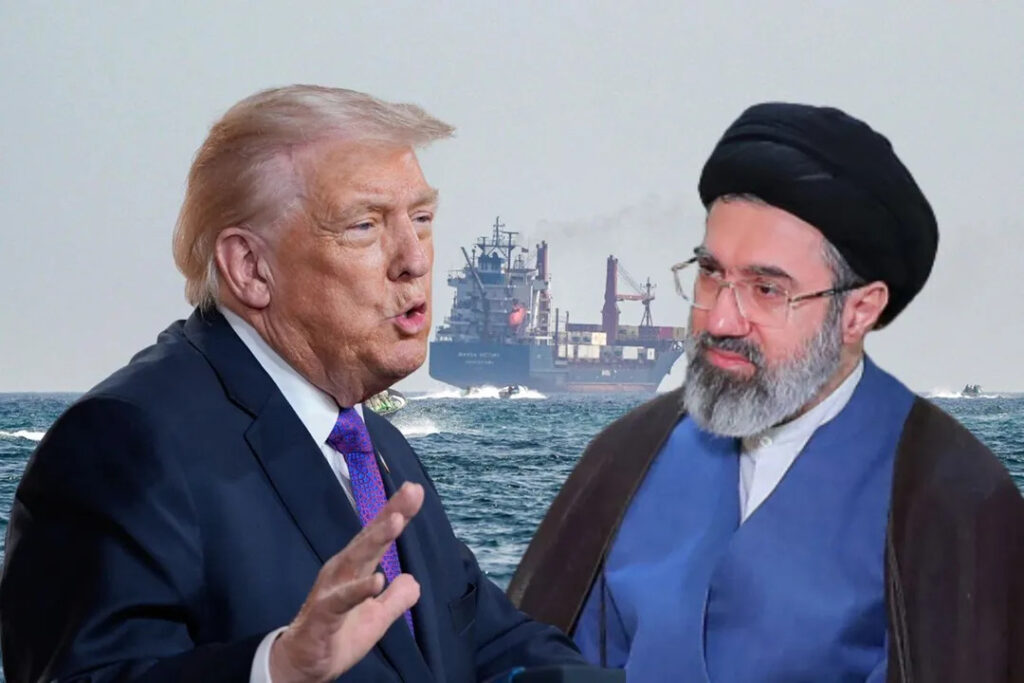
The broader crisis is rooted in Iran’s blockade of the Strait of Hormuz, through which roughly 20% of the world’s oil supply normally passes. The International Energy Agency has characterized the resulting disruption as the largest in the history of the global oil market. The IEA and G7 nations have coordinated a release of 400 million barrels from strategic reserves, a record, to provide breathing room, but analysts warn that physical shortages will intensify through April if the strait remains closed. Geopolitical analysts cited by CNBC estimated the world has already lost between 4.5 and 5 million barrels per day, a figure they projected to double by mid-April. For millions of people across Africa, already among the world’s most fuel-import-dependent populations, the crisis has disrupted commutes, raised the cost of basic goods, and pushed household budgets to breaking point.