Trump 50% Tariffs on Iran Weapons Suppliers Signal New Pressure
Quick Reads
- President Trump threatened 50% tariffs on all goods from any country supplying Iran with military weapons, effective immediately.
- The announcement came just hours after the US and Iran agreed to a Pakistan-brokered two-week ceasefire on April 7, 2026.
- Trump did not name any countries, but China and Russia are Iran’s two most significant weapons suppliers.
- Analysts have called the tariff threat legally questionable, noting the Supreme Court struck down Trump’s broadest tariff authority in February.
- US intelligence has since reported that China may be preparing to ship shoulder-fired anti-air missile systems to Iran, potentially triggering the very tariffs threatened.
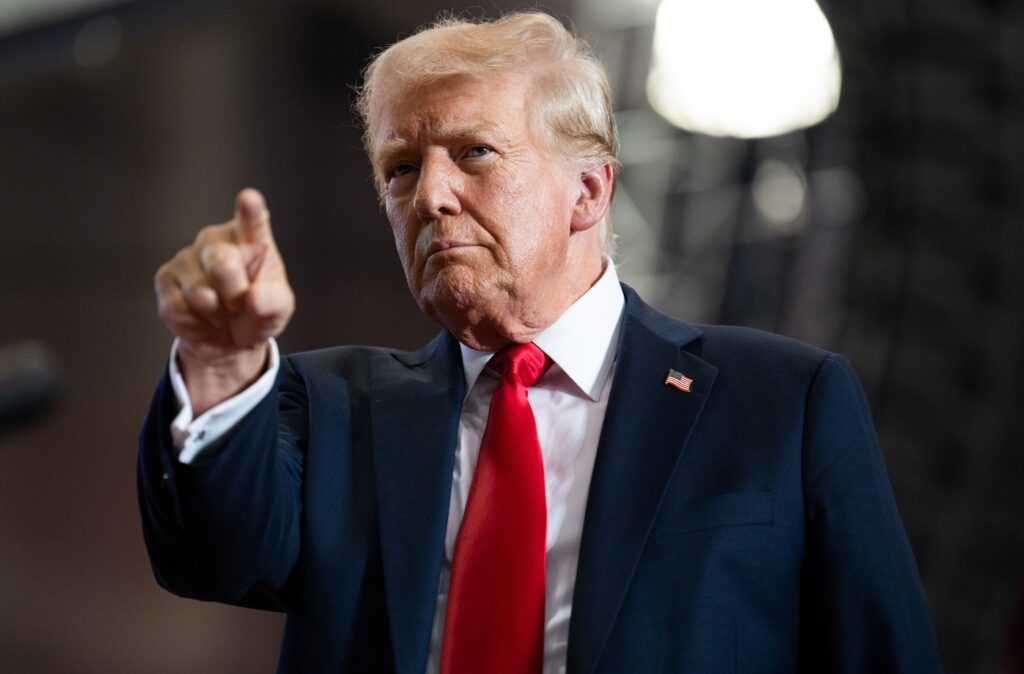
WASHINGTON, April 8, 2026: President Donald Trump has threatened immediate 50% tariffs on imports from any country supplying Iran with military weapons. He made the announcement in a Truth Social post on Wednesday morning, just hours after a fragile two-week ceasefire between the US and Iran took effect. The ceasefire was brokered by Pakistan on April 7. The tariff threat left no room for negotiation. Trump wrote: “A Country supplying Military Weapons to Iran will be immediately tariffed, on any and all goods sold to the United States of America, 50%, effective immediately. There will be no exclusions or exemptions!”
The Legal Hurdle Behind Trump’s Tariff Threat
Trump’s post did not specify the legal authority behind the proposed tariffs. That omission is significant. In February, the Supreme Court struck down his use of the International Emergency Economic Powers Act (IEEPA) to impose broad global tariffs. A lower court subsequently ordered refunds of approximately $166 billion in collected tariffs. Rachel Ziemba of the Center for a New American Security told Al Jazeera that “there’s no immediate policy lever and authorization” available for such a move. She said Trump would need either an act of Congress or a different trade tool. Trump’s remaining options include Section 301 unfair trade tariffs and Section 232 national security tariffs. Both require public comment periods and, in Section 232’s case, a months-long investigation before taking effect.
Trump 50% Tariffs on Iran Weapons Suppliers: China and Russia in Focus
Trump did not name any country in his post. However, the message was widely read as a warning to China and Russia. Both nations have supplied Iran with missiles, air defence systems and technology, according to Reuters. China and Russia have denied providing weapons recently. Allegations against Russia have persisted, according to Al Jazeera. Reuters reported in March that China’s top chipmaker SMIC sent chipmaking tools to Iran’s military. Two senior Trump administration officials confirmed that report. Josh Lipsky of the Atlantic Council told Al Jazeera the tariff threat was “China-related.” He noted Trump was unlikely to follow through before his planned visit to Beijing in mid-May. US Trade Representative Jamieson Greer also said Washington was “not looking for massive confrontation” with China ahead of a planned Trump-Xi meeting.
China’s Ceasefire Role Adds Complexity to the Tariff Picture
China’s position in this crisis is deeply contradictory. Iranian officials credited a last-minute push by Beijing with securing Tehran’s agreement to the ceasefire, a claim Trump himself validated, according to Bloomberg. Pakistani Prime Minister Shehbaz Sharif publicly thanked China for “invaluable and all-out support.” Yet US intelligence, reported by CNN on April 11, indicated China may be preparing to transfer shoulder-fired anti-air missile systems known as MANPADs to Iran. Two sources told CNN that Beijing was routing the shipments through third countries to mask their origin. China’s defense ministry denied supplying weapons. Spokesperson Zhang Xiaogang said on Thursday that China had “always been open and above board on the Iran issue.” The denial has not resolved US concerns. The ceasefire runs until approximately April 22. Peace talks involving US envoy Steve Witkoff and Iranian Foreign Minister Abbas Araghchi began in Islamabad on April 11.