Remita Identifies Fintech as Catalyst for Nigeria’s $18.3bn Digital Economy

Quick Read:
- Nigeria’s digital economy is projected to reach $18.3bn by end of 2026
- Remita’s Lanre Idowu says fintech is bridging the digital divide, but gaps in connectivity, literacy and trust persist
- Comments made at the NITRA Innovative and Scientific Conference in Lagos
Nigeria’s digital economy is racing toward a projected $18.3 billion valuation by the end of 2026, but industry voices are warning that hitting that number means little unless ordinary Nigerians can actually plug into it.
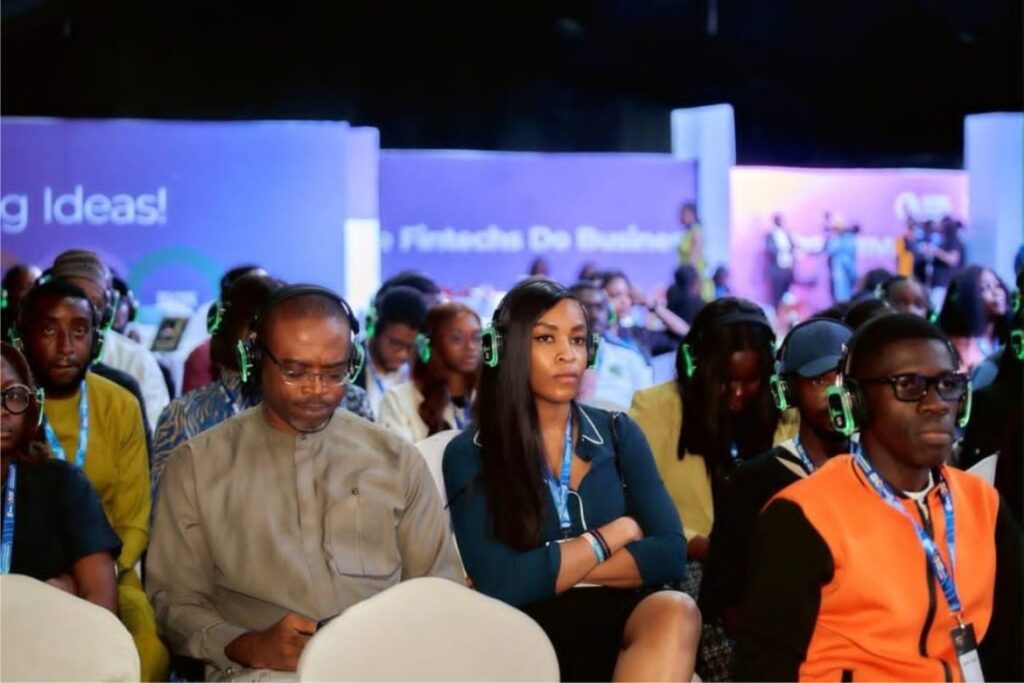
That was the core message from Lanre Idowu, Divisional Head, Financial Industry Partnerships at Remita, who spoke at the Nigeria Information Technology Reporters Association (NITRA) Innovative and Scientific Conference in Lagos. According to Idowu, fintech has emerged as the single biggest catalyst for closing Nigeria’s digital divide, making financial services accessible to millions who were previously locked out of the formal economy.
Nigeria has built global recognition for its buzzing tech ecosystem and fast-moving fintech scene, Idowu noted, but stubborn gaps remain, patchy broadband coverage, the high cost of data, low digital literacy and a persistent trust deficit, especially in rural communities. He described these as the real threats to realising the full value of Nigeria’s digital economy.
“The digital divide is ultimately an opportunity divide,” Idowu said, framing the issue as one that separates Nigerians who can participate in today’s economy from those left on the sidelines.
He pointed to how far the country’s financial landscape has travelled, from a time when banking meant queuing at a physical branch, to today’s world of ATMs, mobile banking, USSD, digital wallets, instant payments and agency banking. “Geography, distance and time have become less of a barrier,” he said.
For Idowu, fintech’s real win isn’t just moving money faster, it’s opening doors for students, farmers, traders, small business owners and civil servants who previously had no easy way into the financial system. “A sophisticated solution that reaches a thousand people is impressive. A practical solution that reaches millions is transformative,” he said.
Remita itself plays a role here, providing payment infrastructure for government transactions, banks and businesses, while leaning on partnerships and agent networks to push financial services into underserved communities. “When the rails work, businesses grow faster, public services become easier to reach and citizens participate more fully in the economy,” Idowu added.
He credited the sector’s progress to collaboration, government, regulators, banks, telecom operators, fintech players and the media all pulling in the same direction. “Every significant leap has come from partnership, not isolation,” he said.
Still, the obstacles are real: uneven internet access, expensive data, limited device ownership and low digital literacy continue to hold back inclusive growth. Idowu called for solutions built to work across devices, network conditions and local languages, arguing that true innovation should be measured not by how many products hit the market, but by how many Nigerians can actually use them.
“Nigeria’s digital future is not something we are waiting for. We are already living it,” Idowu said. “We close the digital divide not merely through technology, ambition or innovation, but through access, inclusion, trust and collective action.”