
England Is About To Ban Phones In School.
Quick Reads
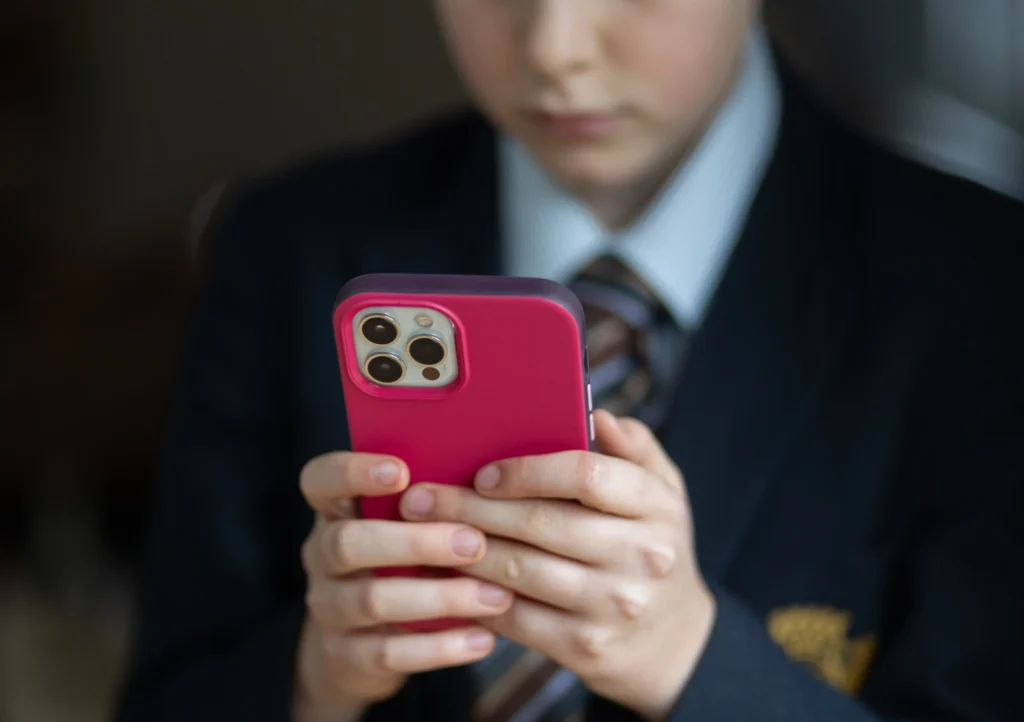
- The UK government announced on April 21, 2026, that it will amend the Children’s Wellbeing and Schools Bill to legally require all schools in England to ban mobile phone use during the school day
- Education Minister Baroness Jacqui Smith told the House of Lords the change would create a “clear legal requirement for schools.”
- Exceptions are expected for sixth-form students, medical devices, and certain boarding school settings.
- The law applies only to England, as education is a devolved matter across Scotland, Wales, and Northern Ireland.
Most schools in England already tell students to put their phones away. The problem is that telling them to was never technically the law. Some headteachers followed the guidance. Others did not. Starting soon, that choice is being taken away entirely.
It was reported on April 21, 2026, that the UK government is set to formalise what has until now been advisory guidance into binding legislation. Education Minister Baroness Jacqui Smith announced the move in the House of Lords on Monday, confirming the government would table an amendment to the Children’s Wellbeing and Schools Bill that would make phone-free school days a legal requirement across every school in England.
The shift matters because of what the existing rules actually were. Earlier this year, the Department for Education updated its guidance to say that schools should be phone-free environments by default, covering lessons, breaks, and lunchtime. But guidance is not law. Headteachers retained the final say, and that inconsistency left parents and students in different schools operating under completely different rules with no uniform standard to point to.
Baroness Smith was measured but direct in her language to the Lords: “We recognise the strength of feeling on this issue, both in this house and beyond.” The Department for Education framed the change not as a reversal of position but as a way to give “legal force to what schools are already doing in practice. It was confirmed that the amendment is expected to be tabled within days as the bill continues its parliamentary journey.
Not everyone is convinced the legal change will do much on the ground. Pepe Di’Iasio of the Association of School and College Leaders told that the vast majority of schools already enforce strict phone policies, and that the bigger need is funding for secure phone storage systems rather than another layer of legislation. He also raised a point that gets less attention in the school ban conversation: whatever happens inside the building, children are still on their phones the moment they leave the gate. Without stronger regulation of social media platforms themselves, the effect of a school-hours ban has real limits.
The politics around the bill have been notably messy. Reported that peers in the Lords had twice voted to attach a social media age ban for under-16s to the same bill, with both attempts rejected by MPs in the Commons. That back-and-forth, described in parliamentary circles as “ping pong,” was threatening to run the bill out of time before the current parliamentary session closes. The government’s decision to accept a statutory phone ban is widely read as a concession designed to get the broader bill across the line before the window closes, rather than a sudden change of heart on the policy itself. The bill itself is described by ministers as the biggest piece of child safeguarding legislation in decades, covering everything from a compulsory register for children not in mainstream school to crackdowns on profiteering in the children’s social care sector.
Opposition parties are claiming credit regardless. Conservative shadow education secretary Laura Trott said publicly that Labour had been “forced to U-turn,” pointing to years of Conservative pressure on the issue. Liberal Democrats welcomed the change while calling for proper funding to help schools manage enforcement without adding financial pressure to already stretched budgets, a concern very much alive.
For parents, the practical effect is straightforward: a ban in one school will no longer mean a free-for-all in the school down the road. For students, the school day is about to get noticeably quieter. Whether that translates into better focus and wellbeing, as supporters argue, or simply moves the problem to the walk home, is a question the data will eventually answer.
England joins a growing list of countries tightening rules around phones in education settings. France has had a school phone ban since 2018. The Netherlands moved in the same direction more recently. Whether the legal change in England proves more than symbolic depends largely on how consistently Ofsted chooses to enforce it through inspections, and whether schools get the practical tools they need to make it work beyond just the paperwork.